Going Gay: How Notions of Gay Masculinity Shape Policy

Think about how the above film trailer for “Brokeback Mountain” differs from the short story.  How does the film/book use traditional notions of masculinity to explore the “alternative” identity of the gay male.  Now, take a look at the readings for today.  In groups, think about how constructions of gay masculinity – and gay identity in general – shape American policy.  Discuss the following questions:

  1. What is Zack Rosen’s argument?  Why do you think he is irritated by the stereotypes he explores?  What are the dangers in them? What examples can we come up with for how gay masculinity is portrayed?
  2. How does Rosen’s argument relate to what we know about social constructions of masculinity in Fight Club?  How might “Brokeback Mountain” challenge popular representations of gay men?
  3. Check out DADT.  How does the language of the bill reinforce notions of the popular “gay” identity?  How has the reversal related to changing cultural ideas about gay masculinity?
  4. Think about the cultural context for either DADT or it’s Obama-era reversal, using examples from popular culture to support your claims about how gay male identity is viewed.

How to Identify A Homosexual

And now, MIDTERM ADVICE! 😀

Let’s talk about how to ace this little Midterm.  To do that, we first have to watch some snowboarding Slopestyle runs:

Ok, so our Midterm is pretty much an intellectual Slopestyle.  You will all run the course differently and with your own unique style and choices – but there are a few elements and moves all of you need to incorporate in your writing.  Here they are:

The Drop In: Focus and Structure

You must make a thesis statement for your close reading.  This thesis statement must include the text or texts you are reading, the claim/s about gender that you want to make, and the historical or cultural context you are thinking through in the short response.

Drop in with focus and stay on the dang course by studying the Deductive Structure Guide and the Close Reading Guide.

The Rails: Social Construction Theory

Like the rails, you get to decide how you ride this element.  But you can’t skip it, or you definitely will not medal.  This means you need to carefully review Social Construction and Lorber’s Essay.

You need to substantively address social construction in whatever question you choose to answer by using the ideas and vocabularies of this theory.  Show off what you’ve practiced in this course – how to focus research on the relationships between texts and social/cultural attitudes about gender, sexuality, and identity.

The Jumps: Texts, Contexts, Personal Experience

Jump tricks are where you face the most choice in Slopestyle and that’s true for this Midterm obstacle course as well.  You’ll be able to address the gender, sexuality, and even racial identity with which you most connect.  There will be questions focused on femininity, masculinity, gay masculinity, lesbian identity, and one focused on non-white femininity.  To prepare for drawing on your strengths in this trick section, take a look at this handy study guide:

STUDY ALL THE THINGS (in the area of your choice:):

Social Construction of Women and Women of Color and Lesbian Identity:

Social Construction of Men and Masculinity:

Social Construction of Gay Masculinity:

For this element of the Midterm, you can get creative with some impressive Autoethnography twists – draw on your personal experience to build your argument if you want!

Crossing the Finish Line: Conclusion

If you have time, bring it all home to the podium with a stellar conclusion that draws on the ideas of the Deductive Structure Guide conclusion tips.  Why should I care about your answer?  Why does this social construction analysis matter for us as a culture?  

You Gotta Fight For Your Right. . .To Ace This Group Quiz!

imgres-14

Fight Club Super Group Quiz:

Groups 1 & 4.  Why do you think the narrator needs to attend the testicular cancer support group in order to sleep?  Why can’t he cry when Marla is present?  Why can he cry with Bob and how does this interaction explore the notion of masculinity?  What do you think Palahniuk is trying to say here?  Use plenty of evidence from the novel or our readings – Lorber in particular – for your analysis.

Groups 2 & 5.  Think back to the Gibson and Beato articles we read.  What evidence do we see in the first three chapters that Palahnuik’s book might be exploring similar claims about how urbanization, the women’s movement, and modern culture are changing “warrior masculinity”?  Consider the narrator’s occupation, the character Bob, the testicular cancer group name – or any other details that you think might support this connection.  Use evidence from the novel and articles to support your claims.

Groups 3 & 6. What kind of feminine identities does Palahniuk construct through Chloe and Marla?.  Do we think they work to interrogate or transgress traditional constructions of femininity? How?  Use social construction wiki, Lorber’s essay, and evidence from the novel to support your answer!

POST HERE: 10

11

13

Ok, now let’s discuss!!!

Fight Club in case y’all behind!

Also, check out the Rubrics and Writer’s Memo questions for your final autoethnography due tonight, midnight! 😀

Holy Peer Workshop Day, Batman!

That’s right – time to be a super hero; it’s peer workshop day! 

Alright, hear me out.  I know many of you groan when you hear the words “peer workshop” or that famous English teacher phrase, “now you get to respond to classmates’ writing.”  I think this is because for most of us, writing has always been a very solitary, isolated act.  Writing can a social process, a collaboration between, at the very least, audience and rhetor.  Today you’ll practice engaging with the ideas and rhetoric of your peers and in turn gaining their insights about your thinking.  Peer workshop days can be very productive, social, I dare say fun – if we all adopt the understanding that public response to our writing and thinking is always helpful in becoming better writers (and thinkers).  Alright, so I’m going to break it down:  here’s what you’ll need to keep in mind:

* You are NOT your peer’s copy editor; don’t worry about sentence-level “error” or grammatical “mistakes”.  You are not expected to be an expert on mechanics and style of English writing.  Neither is your buddy

*You ARE your peer’s reader – and as a reader you can certainly call your peer’s attention to moments where you are confused, entertained, wanting more detail, missing the point, etc.

*You ARE your peer’s colleague in a sense.  You are working together to collaborate on how to build better, clearer writing.  That being said, be helpful, not critical.  Be supportive, but not patronizing.  Above all – DO NOT be lazy.  The comment “I like this intro, Bro,” is really nice, but also generic and disengaged.  Be specific, substantive, and reflective.  I promise this will pay off in the quality of feedback your own writing receives!

*This is a social activity!  Feel free to dialogue on, discuss, and have fun with your ideas about one another’s work!

Now, here’s what you need to do:

*Read the RQI draft of you peer (or peers if there is time).  Make notes on the specific moments in the piece that are enjoyable, clear, lack clarity, etc. These comments and notes can be simple reactions to, questions about, or compliments about the text.

You MUST address the following questions:

1) What is the gender identity or identities being examined? Is it clear what “text” being closely read?

2)Does the essay have a unifying purpose?  What is is?  Where does the writer reveal this?  (introduction, conclusion, etc?)

3)How is the writer using direct quotations and details from the “text” to support the thesis and purpose of the essay?  Are there enough quotations?  Too many?

4)Are there any moments in the essay where, as a reader, you feel curious to know more or wish the writer had developed his/her ideas more fully?  Any moments of confusion?  If so, where are they and how might the writer help be more clear or thorough?

5)Finally, look at the prompt to which your peer is responding.  Is the prompt fully addressed through the writing?  What could be added, cut, re-structured to help answer the assignment or clarify the ideas?

Post your answers to the questions above along with your initial reaction comments and notes in Canvas. (RQI: Peer Workshop Notes).

Power, Kissing, and Becky with the “Good” Hair: Making Close Reading Data into Cultural Knowledge

Image result for power the show

Today is all about preparing for greatness.  To this, let’s first get in our groups and read the following student examples of close reading heuristics and autoethnographies:

The Illusion of Power             All Women Matter           The Kissing Booth 
Heuristic                                     Heuristic                             Heuristic
Autoethnography         Autoethnography              Autoethnography
   
  • Now choose your favorite example and think about how this student used their heuristic to help build a final paper:
    • What are the evidence/examples and claims that the writer makes use of in order to show us how their primary source socially constructs notions of gender in their own life?
    • What kind of evidence does the writer use to support their larger claim that the show, movie, or advertisement affected them?
    • What voice and tone does the writer use?  Why do you think they makes these choices?
    • How might you use this particular autoethnography as a model?  What do you like about it?  What do you think could improve in the writing?

As you begin drafting your final paper for this Research Quest, remember to check out the guide to Structuring Your Ideas to help you as you outline and organize your knowledge.

Social constructions are everywhere, dude. . .

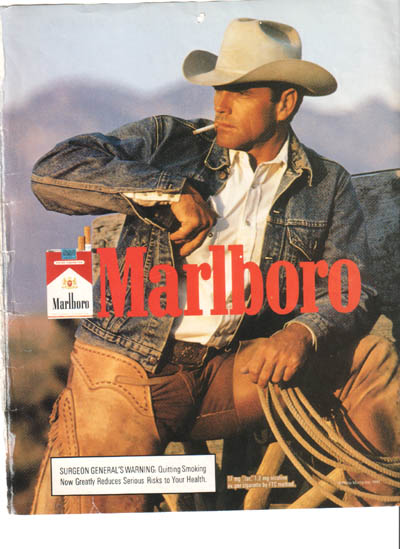
  “Masculinity is not something given to you, but something you gain. And you gain it by winning small battles with honor.”

-Norman Mailer

Before we jump into Bro Day 1, let’s review last week’s ideas:

  •   How do social constructions of female identities affect policy?
  • How have women (and men, too) challenged those policies and constructions?
  •   How can interrogating and testing inferences help us evaluate texts that construct identity?

Now, in your groups, examine the readings for today to answer the following questions:

  1. Gibson concludes what about the Vietnam War and “paramilitary” culture?
  2. Beato draws a similar conclusion to Gibson about the cultural cause for practical joke/fraternity popularity in the early 19th century – how might this relate to college fraternities?
  3. Do you know someone who has a man cave?  What is in it and how does it represent that man’s masculine identity?  Do women have “caves” or spaces where they escape their familial roles and hang out with only other women? What spaces would these be?
  4. Finally, share your RQI proposal ideas. 😀

Post your notes from the questions here:

Section 10

Section 11

Section 13

And now, allow Indiana Jones to help us understand our first Research Quest:

Inferences, Historical Context, And Chicks (Wait – I Mean “Angels” – UGH)

I think I could write a pretty strong argument in favor of female suffrage, but I do not want to do it. I never want to see the women voting, and gabbling about politics, and electioneering. There is something revolting in the thought. It would shock me inexpressibly for an angel to come down from above and ask me to take a drink with him (though I should doubtless consent); but it would shock me still more to see one of our blessed earthly angels peddling election tickets among a mob of shabby scoundrels she never saw before.
– Letter to St. Louis Missouri Democrat, March 1867

Women, go your ways! Seek not to beguile us of our imperial privileges. Content yourself with your little feminine trifles — your babies, your benevolent societies and your knitting–and let your natural bosses do the voting. Stand back — you will be wanting to go to war next. We will let you teach school as much as you want to, and we will pay you half wages for it, too, but beware! we don’t want you to crowd us too much.
– Letter to St. Louis Missouri Democrat, March 1867

Both of the above quotations are from American writer, Mark Twain.  Later, as the suffrage movement continued – Twain changed his attitude and began writing and speaking in favor of the 19th amendment.  Consider the popular inferences made about all women during the late 19th and early 20th centuries:

  • Women were naturally vain
  • Women were innately incapable of reason and rational thought
  • Women were “adult children” who needed guidance and protection
  • Women were simply property of their fathers and husbands
  • Women were created to be “angels in the house” – or passive moral compasses for naturally “bad” husbands
  • Women were instinctively willing obedient servants to husbands who represented God head in the household

Often, women did (and still do) help to legitimize these “truths” with their behavior and writings. So, in many ways these inferences looked reliable to anti-suffragists. With your groups, think about the “number of different explanations” for these inferences made about the “nature” of female humans.

  1. How reliable are these inferences? 
  2. What possible explanations might we find for female behavior and choices that helped perpetuate these “truths”?

Consider the following video:

Image
  1. How did the inferences about women lead to judgments?
  2. What relationship can we find between cultural constructions, often inferences, and social and legal judgments?
  3. Use Sojourners Truth’s ‘Aint I a Woman to discuss how can rhetors change judgments by helping to present facts that question the reliability of inferences?

And finally, because you are awesome students – I leave you with this:

Learn with me!

Bias, Gender, and Fabulousness – Ok, Just Close Reading. :/

Now that we have collaborative groups, let’s think about some stuff, shall we?  Get together with your group members, open up the assigned readings for last Friday, and answer the following questions with your buddies.  One group member can post answers in your Canvas discussion board:

  1. What exactly is a bias?  How do they form?
  2. What connection do you see between the social construction of certain identities and bias?
  3.   What evidence can we think of in our own childhood that helps support Riley’s rant about toys? What negative effects might we consider when thinking about the way our toys and the marketers who sold them gendered us?
  4. Share your Gender Bias Test Result with your buds.  How did you all do?

Check out the photo above.  That’s a picture of Billy Tipton, a famous jazz musician of the 1930’s and 40’s.  How does his story help make the case that gender is something different from sex?

Ok, now get out those children’s books, y’all!  Let’s check out your first close reading!


Doing Gender, Doing Close Reading

Welcome Back!

Let’s finish meeting everybody and see if there’s any questions about our course syllabus!

Today we’ll be thinking about the ideas Lorber explores in her article and how closely reading the world around us for gendered messages can help us become better researchers and intellectuals.

First things first:

Let’s make some teams because everything is better with a crew.  Introduce yourselves to your new besties and discuss the following questions:

  • What exactly is social construction theory?  Explain it in your own words.
  • What examples or evidence does Lorber use to support and “prove” that gender is socially constructed?
  • Do we buy Lorber’s argument?  What evidence can we think of in our own childhood that helps support or works to refute her claims?

Discussion:

The Boy/Girl binary

Gendering in Culture: The Aristocats

Close Reading Homework

Welcome To English 104!

Get Ready to Intellectualize. . .

  • Introductions
  • Syllabus, Course Expectations, and all that
  • Readings and Assignments
  • Here’s a bit about the larger goals of our time in this AWESOME class:

 “College learners pass through three stages of intellectual development before becoming sophisticated critical thinkers.”

a)   Dualism.

  •  tend to see the world in polar terms: black and white, good and bad, and so on.
  •  have what Perry calls a “cognitive egocentrism” – that is, they find it difficult to entertain points of view other than the ones they themselves embrace.
  • tend to ally themselves absolutely to whatever authority they find appealing.
  • At this stage in their development, students believe that there is a “right” side, and they want to be on it. They believe that their arguments are undermined by the consideration of other points of view.

b)   Relativism.

  •  understand that there often is no single right answer to a problem, and that some questions have no answers.
  •  beginning to contextualize knowledge and to understand the complexities of any intellectual position.
  •  students in this phase sometimes give themselves over to a kind of skepticism. For the young relativist, if there is no Truth, then every opinion is as good as another.
  • At its worst, relativism leads students to believe that opinion is attached to nothing but the person who has it, and that evidence, logic, and clarity have little to do with an argument’s value.

c)    Reflectivism.

  • eventually come to see that, indeed, some opinions are better than others.
  • begin to be interested in what makes one argument better than another. Is it well reasoned? Well supported? Balanced? Sufficiently complex?
  • When students learn to evaluate others’ points of view, they will begin to evaluate their own. In the end, they will be able to commit themselves to a point of view that is objective, well reasoned, sophisticated – one that, in short, meets all the requirements of an academic argument.
– William Perry’s Forms of Intellectual and Ethical Development in the College Years: A Scheme (1970)
MoralRelativism


Part of what this course is designed to do is move you all from dualism, PAST SCARY RELATIVISM, and to reflectivism – and one of the best ways to begin this process is to dive into examining gender, sexuality, race, class, and even hipsterism – to see how our culture socially constructs these identities.

Because we all have one, we’ll start of with gender.  Take a look at this excerpt from a Season 2 episode of Parks and Rec:

How does Leslie Knope use the gender biases and constructions of what is “female” to her advantage?  What of these constructions do we believe?